Energy Sharing and Multiple Supply Contracts in Ireland: Our Response to CRU/2025261, and What It Could Mean for Commercial and Industrial Customers
Triple Edge Energy submitted a response to CRU/2025261 — the CRU’s Call for Evidence on the conceptual design for energy sharing and multiple supply contracts in Ireland — in March 2026. This post sets out our main positions and the reasoning behind them.
The full submitted response is available as a downloadable PDF.
What the consultation covers
At the moment, a single grid connection point means a single supply contract. One supplier, one meter, one bill. That is fine for a straightforward import customer. It does not suit a business with rooftop solar, a battery system, an EV fleet, and potentially a neighbour or tenant with whom it wants to share surplus generation.
CRU/2025261 sets out a conceptual design for two related changes. Energy sharing would allow customers with on-site generation to direct surplus to other customers, rather than simply exporting at whatever rate their supplier offers. Multiple supply contracts would allow a single connection point to carry more than one supply relationship — a primary supplier for baseload and a specialist secondary supplier for a specific load, such as EV charging or a defined industrial process.
The consultation document is on the CRU website. Responses closed 25 March 2026. The CRU has not yet published the responses received or a response paper; based on typical CRU timelines, we expect that to follow later in 2026.
Our positions and the reasoning behind them
1. The Prioritisation of Services principle should be scoped to operational fallback only
Section 1.2.5 of the paper states that “the supply of electricity continues to be prioritised” and that “additional services… must not compromise the supply of electricity to customers.” The worked examples that accompany this are sensible: if sharing instructions are not received, settlement falls back to standard export rates; if secondary meter data is absent, the primary meter settles in full. We have no issue with those fallbacks — they are the right technical defaults.
Our feedback is that the principle as written is broader than the examples suggest. The language is wide enough that it could be relied upon in future proceedings to justify requiring primary supplier consent before an aggregator can enrol a customer in a flexibility service, or to justify denying aggregators access to half-hourly secondary meter data that is technically available. That is a significant potential consequence, because flexibility and demand response are not add-ons to the system — they are services that EirGrid, ESBN, and SEAI have identified as central to integrating variable renewables at scale.
We asked the CRU to clarify that the principle applies only as an operational and technical fallback, consistent with the worked examples, and does not establish a hierarchy in which flexibility or aggregation services are structurally subordinate to primary supply interests.
2. Technology Neutrality should be added as a principle
The paper has a clear preference for ESBN-installed secondary meters and acknowledges this could constrain innovation. We proposed a fifth principle — Technology Neutrality — to address this directly.
MID-certified meters (under the Measuring Instruments Directive) are already integrated into a range of distributed energy assets in Ireland: EV chargers, heat pumps, hybrid inverters, and behind-the-meter battery storage systems. The EU harmonised metering standards are relevant here. EN 50470-3:2022 introduces requirements for validating AC energy measurement accuracy during reverse power flow, applicable to meters installed where storage or generation causes bidirectional flow. EN 50470-4:2023 establishes the first harmonised European standard for static DC active energy meters up to 1,500 V — while BESS installations are not listed as an explicit application, the DC measurement framework is technically applicable to metering on DC busbars in storage systems. The European Commission also proposed in COM(2024) 561 (November 2024) to amend the MID (2014/32/EU) to include DC active energy meters within the MI-003 scope; that amendment is in the legislative pipeline but not yet adopted.
The practical point is that customers who have already installed these technologies have, in many cases, already installed metering that meets or could meet a technically reasonable threshold. Requiring them to accept a separately installed ESBN meter on top of that creates cost without a clear technical justification. The UK’s Microgeneration Certification Scheme handles this by setting a MID-compliance threshold and accepting any device that meets it, regardless of form factor. A similar approach here — any metering solution that meets ESBN’s technical and communication standards is eligible, regardless of who manufactured or installed it — would be consistent with the paper’s own Non-Discrimination principle and would avoid unnecessarily disadvantaging customers who have already invested in forward-looking assets, supported by various Government Grant schemes.
The Technology Neutrality principle matters for the energy sharing eligibility criteria too. The paper restricts participation to customers who have “activated their smart meter and moved to MCC12.” A number of commercial and industrial customers have had half-hourly interval metering for years and are already settled on that basis. Framing the eligibility criterion around metering capability — the ability to provide half-hourly import and export data to ESBN — rather than a specific meter configuration code would capture these customers without creating any additional technical complexity.
3. The ESO model needs to work for smaller and newer operators
The Energy Services Operator model — under which an ESO issues sharing instructions to ESBN and manages commercial arrangements with its members — is the more significant of the two design tracks and the one with the most potential for commercial and community energy use cases. We support it.
The detail of the governance framework is still to be determined, pending Directive transposition. But the direction matters for organisations considering whether to plan around the ESO model now. Our view is that the registration or governance regime should reflect the actual risk profile of the ESO role, which is meaningfully different from that of a primary electricity supplier. Primary suppliers have disconnection rights, bear security of supply obligations, and take on fuel poverty and credit risk that are calibrated by the consumer protection framework. An ESO directing sharing instructions between members does not carry those risks. Applying full supply licence obligations to ESOs would create entry costs that exclude the smaller commercial operators, community groups, agricultural co-operatives, and local energy communities that the ESO model is designed to serve.
We also asked the CRU to confirm explicitly that energy consultancies, aggregators, and flexibility providers are eligible to register as ESOs. The paper describes the eligible ESO population as “businesses, local governments, NGOs, and various other communities and associations” — a broad and helpfully illustrative list, but one that does not make clear whether commercial intermediaries operating on a for-profit basis are equally eligible. Given that the Non-Discrimination principle is already one of the four founding principles in the paper, clarifying this explicitly was requested.
4. Option 2 works as an interim step; Option 1 should remain the target for non-domestic customers
The paper presents two options for delivering multiple supply contracts. Under Option 1, a customer’s connection point can host more than one supplier — a primary supplier for baseload and one or more independent secondary suppliers for specific loads, each with their own metering and contract. Under Option 2, a customer’s existing supplier offers a secondary tariff under a secondary meter at the same connection point, with the entire arrangement remaining inside that single supplier relationship. The CRU presents Option 2 as a faster route to delivery because it avoids the central market system changes Option 1 would require.
We support that direction in the near term — for straightforward use cases, Option 2 is a practical way to make some of the benefits of secondary metering available sooner. Our position is on what comes after.
Option 2 keeps the supply relationship within a single supplier, so a customer’s choice is limited to what their existing supplier offers. If that supplier does not offer an EV tariff or a flexible-load product, the customer cannot access one under Option 2. Independent aggregators also have no direct route to secondary meter data, because the secondary metering relationship sits entirely within the single-supplier arrangement. Those structural limits are where the competition benefits of multiple supply contracts — specialist secondary suppliers, genuine independent aggregator access — would otherwise sit. For commercial and industrial customers, those benefits are material.
Our view is that Option 2 should be treated as an interim, with a committed path to Option 1 for non-domestic customers in any subsequent framework.
5. The flexibility and aggregation layer needs design treatment, not just acknowledgement
This is the area where we think the paper needs the most development in the next phase.
The paper acknowledges that energy sharing and multiple supply contracts will not be introduced in isolation and that integration with future services matters. It mentions aggregation briefly in the context of the Prioritisation of Services principle. But aggregators and flexibility service providers receive no design treatment anywhere in the document.
There are several specific questions the framework will need to answer. What happens when a sharing instruction and a flexibility dispatch instruction apply to the same customer in the same half-hour settlement period — which instruction takes precedence, and how are settlement proceeds allocated? Can a customer with a secondary supply contract simultaneously enrol the load on that secondary meter in a flexibility service with an independent aggregator? Does the secondary supplier have any standing to restrict that? Can aggregators access secondary meter data directly, and under what conditions?
These are not edge cases. A commercial customer with rooftop solar, behind-the-meter storage, and an EV fleet may be simultaneously exporting through an ESO sharing arrangement, responding to a flexibility dispatch instruction, and importing from their primary supplier — all in the same settlement period. The framework needs to be able to handle that.
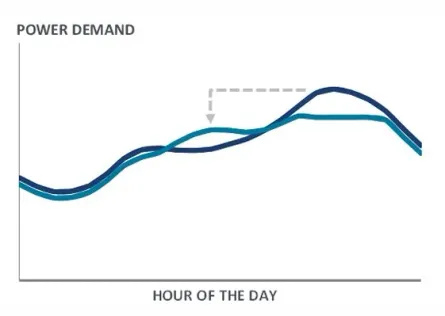
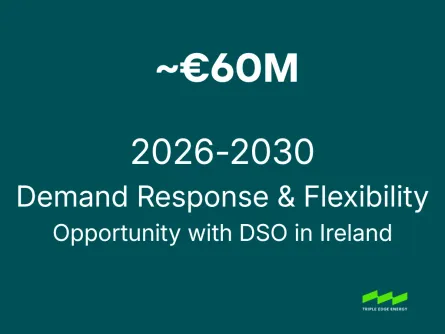
There is also a demand-side dimension that the paper does not address. Demand-side flexibility — customers reducing or shifting load in response to grid or price signals — interacts with the settlement architecture in broadly the same way that generation-side sharing does. Designing the settlement architecture with sharing and secondary supply in mind, and treating flexibility as a later retrofit, risks creating structural barriers to aggregator participation that would be difficult and costly to remove once the system is built.
We asked the CRU to include demand response aggregator and flexibility service provider access as an explicit workstream in the next phase of framework development, so that the settlement architecture choices being made now leave room for clean integration rather than requiring bolt-on infrastructure later.
What we hope sees further treatment in the next phase
The CRU has indicated that a more detailed framework document will follow this Call for Evidence. Submissions and a CRU response paper have not been published as of the date of this post — we expect them later in 2026, and will revisit this commentary when they are available. The areas we will be watching most closely in any next document are: how the Prioritisation of Services principle is scoped; whether Technology Neutrality is taken up as a design principle and how it applies to the MCC12 eligibility criterion; the shape of the ESO registration regime and whether it is calibrated to the ESO risk profile; and whether flexibility and aggregation integration receives explicit design treatment.
We submitted in order to contribute to that process, and we are available to engage further with the CRU on any of the above as the framework develops.
Triple Edge Energy submitted a full response to CRU/2025261 on 25 March 2026. The full submission is available as a downloadable PDF. For queries or to discuss any of the positions set out here, contact us.